Economics, security, and the Second Sino-Japanese War
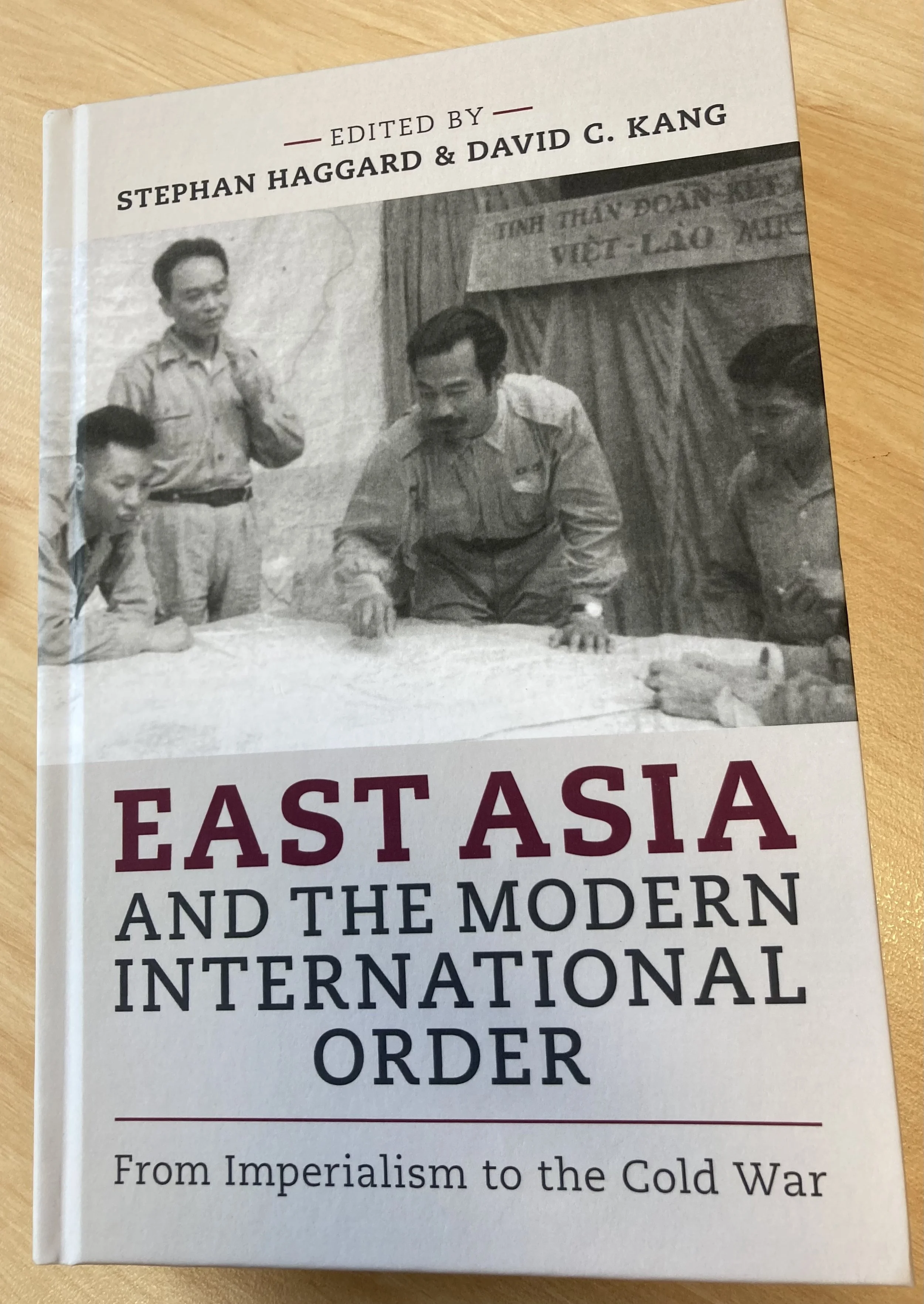
East Asia and the Modern International Order: From Imperialism to the Cold War (Cambridge University Press, 2025)
It was terrific to collaborate with Stephan Haggard, David Kang and other contributors on East Asia and the Modern International Order: From Imperialism to the Cold War, just out with Cambridge University Press. The volume brings together historians and IR scholars re-considering how key events in East Asian international relations like the Russo-Japanese War, the Chinese Exclusion Act, the Korean War, Taiwan Straits Crises, and Vietnam War, continue to challenge Western-centric IR history, and conventional IR perspectives on order, hegemony, alliances and other key concepts.
My chapter shows how systemic-level theorizing on economic interdependence and war fails to explain one of the most significant conflicts in East Asia during the 20th century: the Second Sino-Japanese War. I show how mutually evolving Chinese and Japanese ideas about the relationship between economics and security better explains not only the drivers of that war, but also the persistent economic relationship between China and Japan from 1931 to 1965.
The chapter explores the strategic rather than liberal motivations for economic interdependence in East Asia, and why East Asian states so often confound Western IR theories by choosing economic engagement with their adversaries. Highly recommended for those of you looking to introduce more non-Western cases into your IR and political science teaching!
